If you haven't received this issue, sign up here
Reading time: 6 minutes
YOUR INSIGHTS OF THE WEEK
-
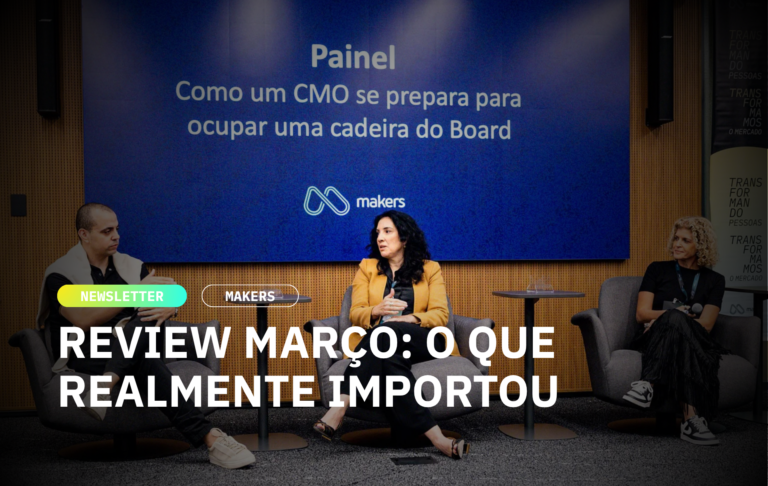
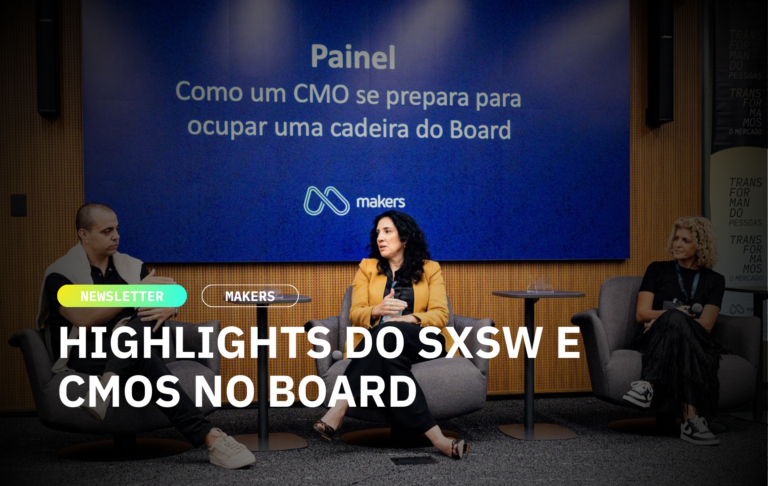
CMO as Creator? The new media for brands has a face, an opinion and courage. And it's called CMO.
-
32% of consumer goods companies have already implemented AI and the rest are racing to keep up.
-
Click-worthy: the curation that brings market movements to the forefront of trends!

CMO as Creator? The new media for brands has a face, an opinion and courage. And it's called CMO.
For years, B2B was the territory of rationality. Long sales, technical language, corporate relations. But something has changed.
Behind the scenes of the country's biggest brands, a new type of influence has begun to shape decisions, inspire markets and redefine authority: the CMO has become a creator.
In an environment saturated with generic content, what moves is trust and those who win it today are the voices that have a face, vision and practice.
CMOs who have understood this are using their own narratives as growth levers, building personal equity that translates into brand value, influence and revenue.
Why is this happening now?
Because the B2B cycle requires trust before conversion.
Because the public wants ideas, not just companies.
Because leaders who share what they live, not what they repeat, build real relevance.
The impact of business leaders' personal brands
- 92% of people trust recommendations from leaders and creators more than brand messages, and 84% believe that a company's image is directly influenced by the presence of its executives on the networks (DSMN8).
- 82% are more likely to trust companies whose senior executives are active on social networks (Entrepreneur).
- In the financial sector, trust in leaders with a personal brand is 6 times higher than in executives who remain anonymous (Brunswick).
- 67% of consumers would be willing to pay more for products and services from companies whose founders have personal values aligned with their own (Brand Builders Group).
- And 90% of employees say that when the leadership is active on the networks, the brand's image is strengthened (Reaction Power).
Cases like lempire's, which generated more than 1 million organic impressions in 90 days on LinkedIn, prove that personal branding is no longer an accessory, it's its own media with real ROI.
Today, creative CMOs are activating three growth levers:
- Top of Funnel, generating awareness and a perception of innovation.
- Media for Equity, exchanging exposure for long-term authority.
- Employer Branding, becoming talent magnets in hotly contested markets.
Salesforce, RD Station, Nubank, Meta and Hubspot have already understood: it's not enough to have a strong brand, you need strong faces behind it.
The future of B2B marketing no longer lies in the institutional post. It lies in building communities around leaders who inspire, share and provoke. And it is there, between credibility and creation, that the new corporate influence is born
The CMO as creator is not a vanity movement. It's a movement of conscience.
Because at a time when anyone can speak, few have anything to say and even fewer have the courage to back up what they say.
The market doesn't need more posts, it needs voices that generate meaning.

32% of consumer goods companies have already implemented generative AI and the rest are racing to keep up.
In partnership with Accenture, this report analyzed responses from 200 decision-makers in the US consumer goods sector, mapping the impact of generative AI on the market. The research highlights how technology has become operational infrastructure, transforming functions, budgets and strategic processes. The study explored:
- Pace of adoption of generative AI and business areas most affected
- Main challenges and risks identified by companies
- Most relevant use cases for AI agents
The categories of consumer goods covered include: non-alcoholic beverages, packaged foods, health and beauty, alcohol and tobacco, pet products, household cleaning and consumer durables.
See what the data shows:
- Full adoption of generative AI: 32% of consumer goods companies have already fully implemented it.
- Expanding use: 34% are expanding generative AI in critical functions.
- Budget: 88% of executives have already earmarked funds for generative AI, 51% for experimentation and 49% for implementation.
Perceived benefits:
- 51% report revenue growth.
- 49% point to an increase in operational efficiency.
- 41% highlight an increase in innovation.
- 36% cited cost savings.
- 34% mention more agility.
- 27% reduction in time-to-market.
- Functions most affected: customer service (44%), marketing (38%), e-commerce (32%), sales (32%).
The full report also includes strategic challenges, team preparation and advanced use cases.


💡 AB InBev replaces Heineken and takes over Champions League in 2027
💡 UFC closes deal, and broadcasts in Brazil in 2026 will be with Paramount.
💡 Figma acquires Weavy and accelerates creation with generative AI

Marketing is going back to where it always belonged: courage.
The courage of leaders, CMOs who put their face, vision and soul into the game.
Courage from brands that understand that technology doesn't replace purpose, it amplifies it.
The next few years will see intense changes in technology, but we will also continue to operate with a human and digital presence.
And the courage of a market that is gradually returning to choosing what is real, not what performs best.
No AI builds influence without intention and no algorithm builds trust without a human voice. I hope you have a great week!
Big hugs and see you next Friday!

Now, we at Makers really want to hear from you:
What did you think of today's edition?